Fencing, gates and animal shelters in Port Richey
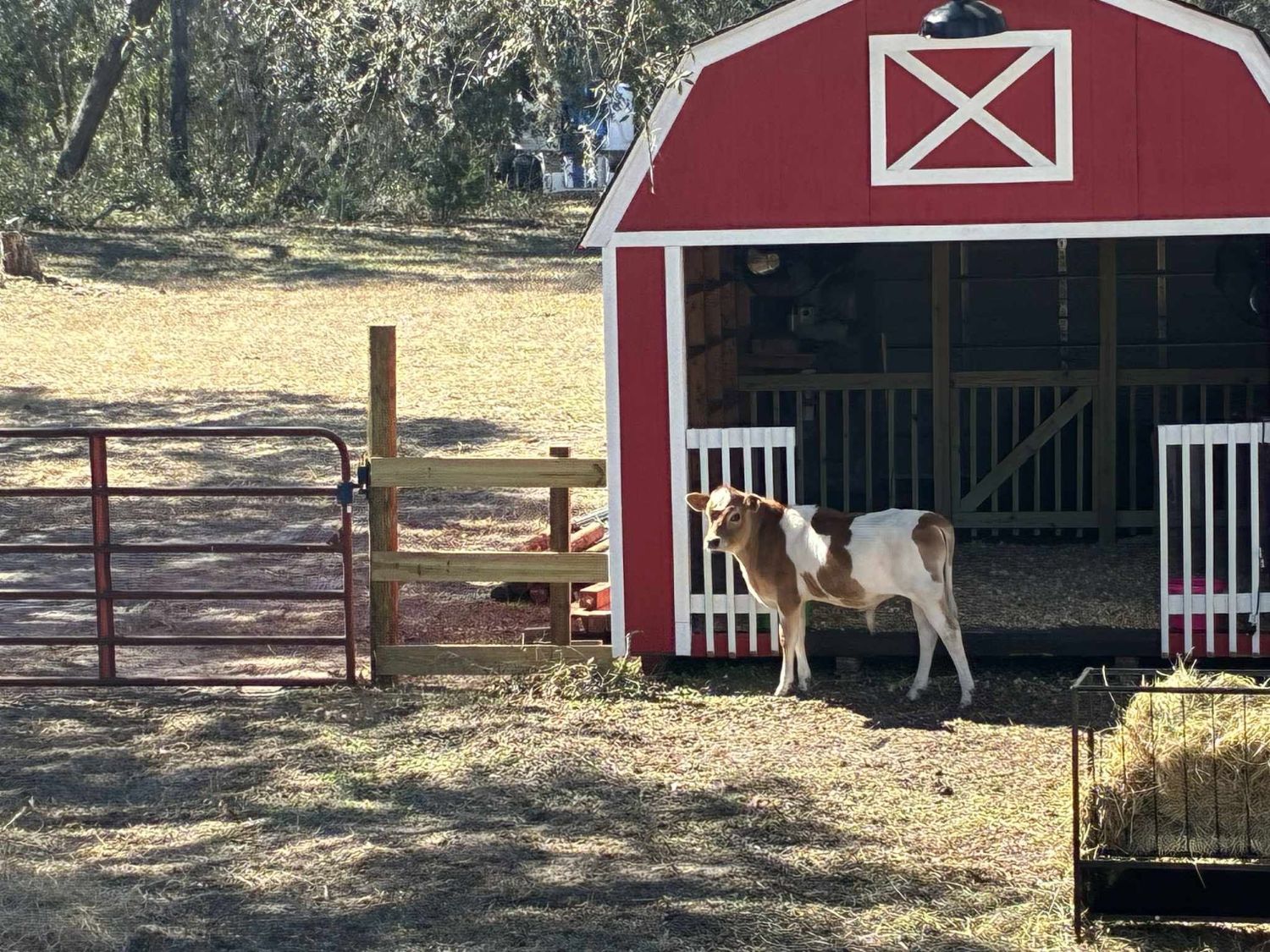
Board fence, pipe gates, run-in shelters and chicken coops for hobby farms and larger lots around Port Richey and across Pasco County. Each shelter is planned for shade, airflow and the animals that will live in it.
What we build
-
Board fence
Three-board and four-board fence for pastures and paddocks, with no-climb wire where small animals need it.
-
Pipe and tube gates
Galvanized gates hung on braced posts, wide enough for a truck or a tractor.
-
Run-in shelters
Three-sided shelters with a metal roof for horses, donkeys, calves and goats.
-
Calf pens and small barns
A covered stall, a hay rack and a fenced pen for a calf or a pair of goats.
-
Chicken coops and runs
Raised coops with nest boxes and roost bars, and runs closed in with hardware cloth.
-
Hay racks and feeders
Built-in racks and feeders that keep hay off the ground and out of the rain.
Planning it in Pasco County
-
Shade and airflow
A shelter needs a roof high enough for air to move and an open side turned away from the worst wind and rain on your lot. Vents up high let hot air out on summer afternoons.
-
Posts and gates in sand
Corner and gate posts carry the most strain, so they are set deeper in concrete and braced. In loose sand an unbraced gate post leans over time and the gate starts to drag.
-
Dry ground and property lines
Shelters go on the highest ground you have, on a built-up pad so the floor stays dry after summer storms. Fence lines are set from your survey, and Pasco County and the cities have rules on fence height and placement.
Materials and options
- Posts
- Pressure-treated pine posts rated for ground contact, set in concrete at corners and gates.
- Boards
- Treated pine boards, painted or left to weather.
- Wire
- No-climb horse wire or welded wire on the inside of the boards for goats, dogs and small stock.
- Gates and hardware
- Galvanized pipe and tube gates or built wood gates, hung on heavy hinges with chain latches.
- Shelters
- Treated pine framing, board walls and a metal roof, with hay racks and feeders built in.
- Coops
- Hardware cloth on runs and vents, buried or skirted along the bottom so raccoons, snakes and dogs cannot dig in.
Fence and shelter questions
What fence keeps goats and donkeys in?
Board fence holds horses, donkeys and cattle. Goats and other small animals can slip through or climb the boards, so they need no-climb wire on the inside of the fence.
Which way should a run-in shelter face?
We look at where the sun, the wind and the rain come from on your lot, then turn the open side away from the worst of the weather while keeping it open to the breeze.
How big should a shelter be?
Big enough for every animal to get under the roof at once, with room left over so one animal cannot keep the others out. We size it to the number and kind of animals you keep.
Do you build chicken coops?
Yes. A coop gets a raised floor, nest boxes, roost bars and vents up high, and the run is closed in with hardware cloth so raccoons and snakes cannot get to the birds.
Have a different question? Call (727) 555-0142.