Patios, pavers and decks in Port Richey
Paver pool decks, patios, walkways and wood decks, laid on a compacted base so they stay level on Pasco sand. Every surface is pitched so rain runs off toward the yard.
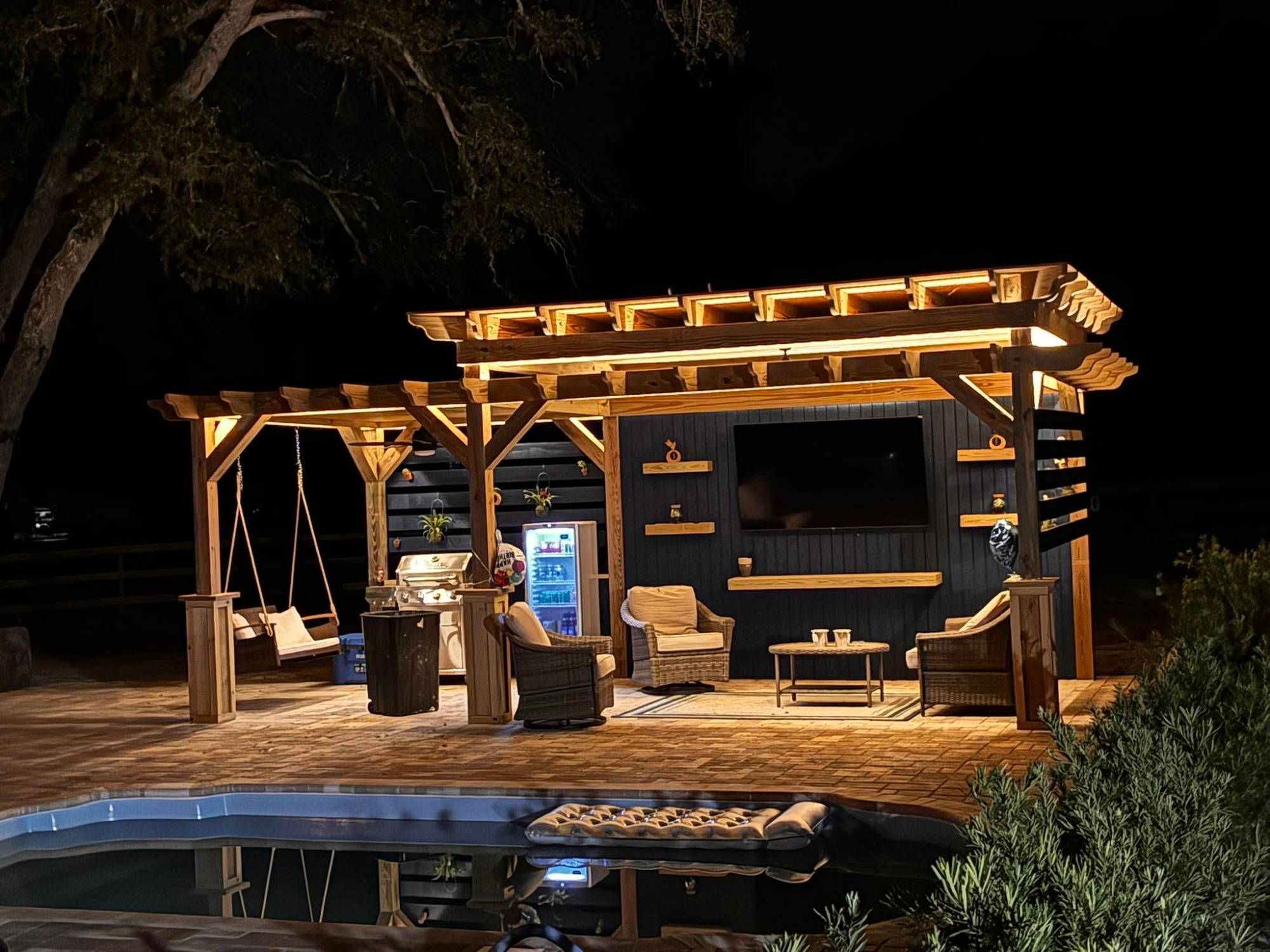
What we build
-
Paver pool decks
Pavers around the pool, cut in along the coping and pitched away from the water.
-
Patios
A paver patio off the back door or under a pergola, sized for a table, a grill or a fire pit.
-
Walkways and garden paths
Paver or stepping stone paths between the house, the patio, the shed and the gate.
-
Fire pit areas
A paver circle with room for chairs around a fire pit.
-
Wood decks
Ground-level and raised decks in pine, cedar or composite, with steps and railings.
-
Pond and garden decks
A small deck with benches at the edge of a pond or a garden bed.
Planning it in Pasco County
-
Sand and base
Pasco sand drains fast but shifts when it is wet, so the ground is compacted, a base layer goes down where the soil needs it, and the pavers sit on a screeded sand bed. An edge restraint around the outside keeps the border from creeping.
-
Drainage
A summer storm can drop a lot of water in an hour, so a patio is pitched away from the house and the pool. Where water collects, a channel drain or a gravel strip carries it out to the yard.
-
Permits and HOA
Raised decks and decks attached to the house need a building permit from Pasco County or the city. Many HOAs also approve the paver style and color, so we put together the plan the board asks for.
Materials and options
- Concrete pavers
- Smooth or tumbled pavers in a range of colors, laid in running bond, herringbone or basket weave.
- Travertine
- Natural stone pavers that stay cooler underfoot, a common pick for pool decks.
- Base and joints
- Compacted base, a screeded sand bed, edge restraint, and polymeric sand in the joints to slow weeds and ants.
- Sealer
- A paver sealer to deepen the color and resist stains from leaves and pool water.
- Deck framing
- Pressure-treated pine joists and beams on concrete footings, with ground-contact lumber near the soil.
- Deck boards
- Pressure-treated pine, cedar or composite boards, fastened with stainless or coated screws or hidden clips.
Patio and deck questions
Why use pavers for a pool deck?
Pavers flex with the sand under them, and a section that settles or gets pushed up by a root can be lifted and reset. A poured slab is one piece, so a crack runs across it and is harder to repair.
Can you lay pavers over my old concrete patio?
Often, yes, if the slab is sound and the added height does not block a door or sit above the pool coping. Thin overlay pavers are made for this.
Which deck boards work best in Florida sun?
Pine, cedar and composite all work. Composite needs the least upkeep but gets hot in full sun, so lighter colors are easier on bare feet.
Will pavers get hot around the pool?
Darker pavers hold more heat. Travertine and light-colored concrete pavers stay cooler underfoot, which is why so many Florida pool decks use them.
Have a different question? Call (727) 555-0142.
Often built together
All services- Pergolas and pavilions Covered outdoor rooms with ceiling fans, TV walls, swings and lighting built into the beams.
- Outdoor kitchens Grill stations, drink fridges, counters and the power and water lines to run them.
- Ponds and water features Lined ponds edged in limestone boulders, with pumps, falls and the plantings around them.