Pergolas and pavilions in Port Richey
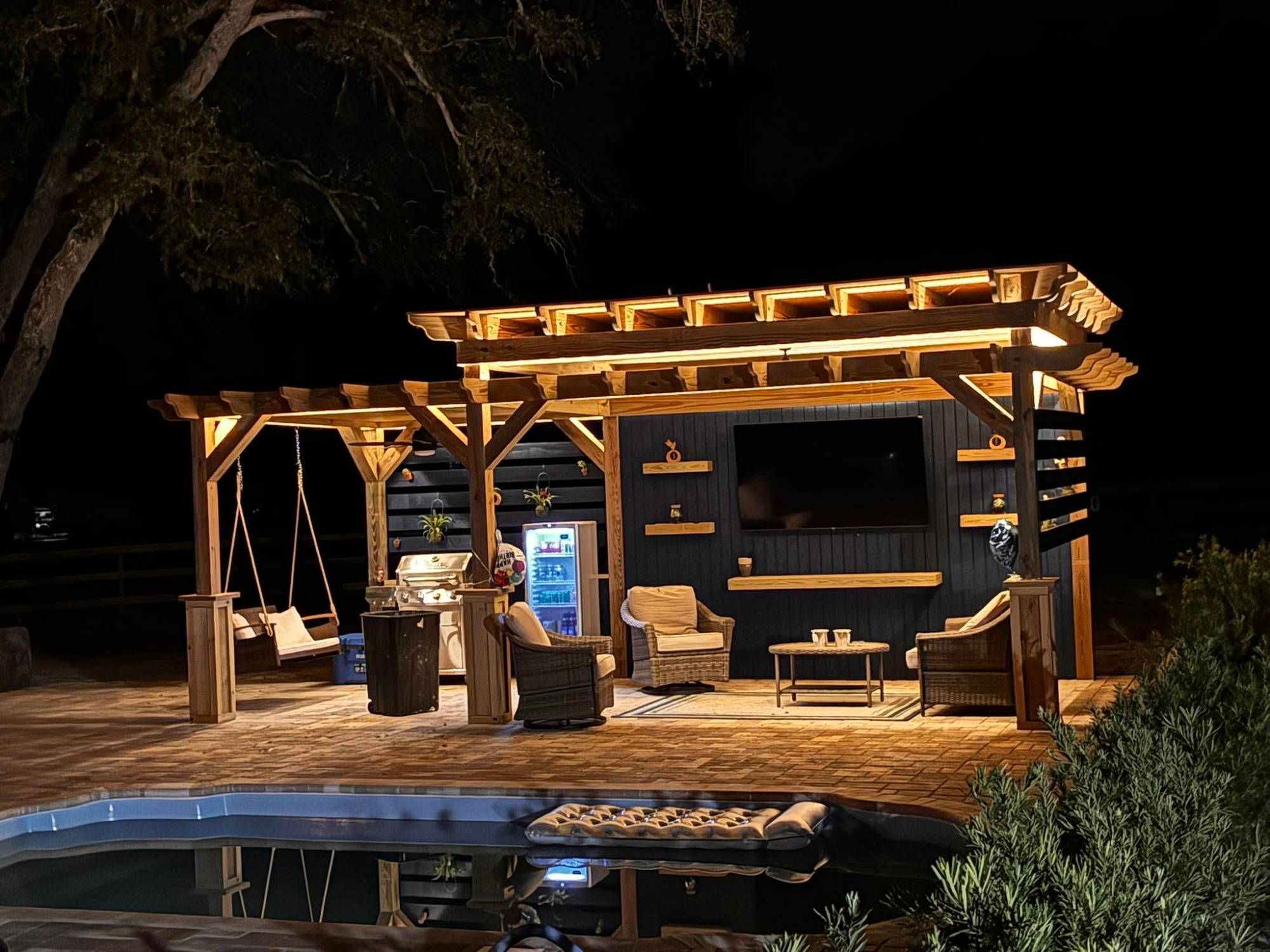
Pine and cedar pergolas and roofed pavilions over patios and pool decks, with ceiling fans, TV walls, swings and lighting built into the beams. Each one is drawn for your yard and framed for Florida wind loads.
What we build
-
Freestanding pergolas
Open rafters or shade slats on four or more posts, over a patio, a fire pit or a garden path.
-
Pool deck pavilions
A roofed pavilion on the paver deck beside the pool, with room for seating, a swing and an outdoor kitchen.
-
Pavilions attached to the house
A covered roof tied into the house framing over a back patio or a sliding door.
-
Ceiling fans and TV walls
Wet-rated fans hung from the beams and a framed TV wall with outlets, with the wiring run up the posts.
-
Lighting in the beams
LED strips tucked into the rafters and dimmable lights set in the beams, on a wall switch or a timer.
-
Swings and privacy slats
Porch swings hung from a doubled beam, and slat walls that block the view from next door or the low afternoon sun.
Planning it in Pasco County
-
Permits and HOA
Pasco County issues the building permit for most pergolas and covered pavilions, and the city building department does inside New Port Richey or Port Richey limits. If you have an HOA, the board usually wants the drawing, the colors and the roof material before the permit goes in.
-
Wind and storms
A solid roof catches far more wind than open rafters, so the posts, beams and roof connections are sized and strapped for Florida Building Code wind loads. Shade cloth, curtains and swings should come down before a named storm.
-
Sand and footings
West Pasco soil is mostly fine sand, so each post sits on a concrete footing sized on the permit drawings. The posts stand in metal post bases above the concrete, which keeps the end grain out of standing water.
Materials and options
- Pressure-treated pine
- Southern yellow pine posts, beams and rafters treated for outdoor use. It takes stain or paint well.
- Cedar
- Western red cedar resists rot and insects without treatment and has a warmer color. It is softer than pine and dents more easily.
- Roofing
- Open rafters, shade slats, 5V crimp or standing seam metal, or shingles matched to the house roof.
- Fans and lighting
- Wet-rated ceiling fans for open sides, LED strip lights in the rafters and dimmable puck lights in the beams.
- Hardware
- Hot-dip galvanized or stainless steel post bases, brackets and hurricane straps, which hold up to salt air near the Gulf.
- Finish
- Semi-transparent stain that shows the grain, or solid stain matched to the house trim.
Pergola and pavilion questions
Do I need a permit for a pergola in Pasco County?
Most pergolas and roofed pavilions need a building permit. Pasco County issues it in unincorporated areas, and the city building department issues it inside New Port Richey or Port Richey limits. We pull the permit as part of the job.
Can a pavilion attach to my house?
It can if the wall and roof framing can carry the load. An attached roof ties into the fascia and the roof line, so we look at the roof pitch, the gutters and the framing on the yard visit.
How does a pergola hold up in a Florida storm?
A pergola built to the Florida Building Code is designed for the wind speed set for its location in Pasco County, with the posts anchored to concrete footings and the beams and rafters strapped together. Loose items such as shade cloth, curtains and swings should come down before a storm.
Can I add fans, lights or a TV later?
Yes. If you think you may want them later, we can run empty conduit up a post during the build so the wiring can be pulled in later without opening up the wood.
Have a different question? Call (727) 555-0142.